Master the Art of Writing an Effective Project Scope
A project scope is a clear and precise description of all the tasks, goals, and deliverables that need to be achieved in a project. It defines the boundaries of what the project will include and what lies outside its scope. The purpose of defining the project scope is to ensure that all parties involved have a shared understanding of what the project entails and what needs to be delivered.
Key Elements of a Project Scope:
- Project Goals
What the project aims to achieve. - Deliverables
The specific products or services that need to be produced. - Timeline
The time period within which the project should be completed. - Resources
The human and material resources required for the project. - Boundaries
What the project does not include, helping to avoid "scope creep" (where the project expands beyond the original plans). - Requirements and Success Criteria
The standards that must be met for the project to be considered successful.
A clearly defined scope helps ensure that the project is delivered on time, within budget, and with the right resources.
Project Goals
Project goals are the specific results or effects that a project must achieve within a given timeframe. They serve as the overarching guideline for the entire project, ensuring that everyone involved understands what needs to be delivered and why the project is important. Clearly defined project goals are crucial for maintaining focus and measuring success.
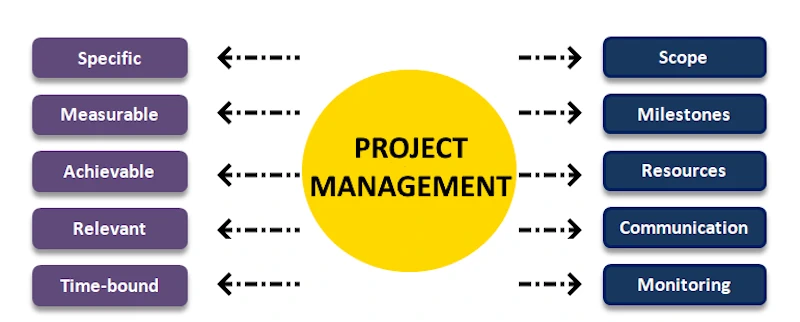
Characteristics of Effective Project Goals:
For project goals to be effective, they should be SMART:
- Specific
The goal should be clearly defined and precise. What are you trying to achieve, and what does it involve? There should be no ambiguity about what the goal is.
Example: Instead of saying "Improve customer satisfaction," a specific goal could be "Increase customer satisfaction by 20% within the next quarter through better service and faster response times." - Measurable
The goal should be measurable so that progress can be tracked and the achievement can be assessed. This can include quantitative (number-based) or qualitative measurements.
Example: "Complete the project within a budget of $500,000" or "Deliver 10 new features to customers by the end of the year." - Achievable
The goal should be realistic and attainable within the available resources, time, and constraints. Overly ambitious goals can lead to frustration, while goals that are too easy may not challenge the team.
Example: If you have a small team, a realistic goal might be to launch a minor product update rather than a complete overhaul. - Relevant
The goal should be relevant to the project's overall purpose and aligned with the organization's strategic priorities. Ask yourself: Why is this goal important for the project and the business?
Example: If the project is about improving a customer service platform, the goals should directly contribute to better customer service. - Time-bound
There should be a clear timeframe for achieving the goal. This provides motivation and a deadline to work towards.
Example: "Complete the design phase by September 30" or "Deliver the final product by December 1."
Types of Project Goals:
- Outcome Goals
The overarching goals that describe the final results the project should achieve.
Example: "Implement a new CRM system that reduces response time to customer inquiries by 30%." - Milestones
Smaller, specific checkpoints that help achieve the overarching goals. These milestones may relate to various phases of the project.
Example: "Complete user surveys within the first month." - Quality Goals
Goals that describe the standards or quality of the delivered results.
Example: "Ensure all software modules are tested and delivered without major defects." - Time Goals
Goals related to completing the project within a specified timeframe.
Example: "Deliver the project within six months."
Importance of Project Goals:
- Creates Clarity
Project goals help all involved understand what is expected and what success looks like. This provides direction and focuses effort. - Motivates the Team
When everyone is working towards the same goal, it creates a shared purpose and motivates the team to work effectively. - Measures Success
Clear project goals make it possible to evaluate progress and results. It becomes easier to determine if the project is on track or if adjustments are needed.
How to Formulate Effective Project Goals:
- Understand the Project's Purpose
Start by understanding why the project exists and its long-term purpose. - Involve Stakeholders
Gather input from all key stakeholders to ensure the project goals align with their expectations and needs. - Prioritize Goals
If there are multiple goals, prioritize them based on what is most critical for the project's success. - Communicate Clearly
Ensure that all project goals are well documented and communicated to the entire team and stakeholders.
When project goals are clearly defined and well communicated, they serve as a powerful management tool, ensuring that the project moves towards a successful completion.
Project Deliverables
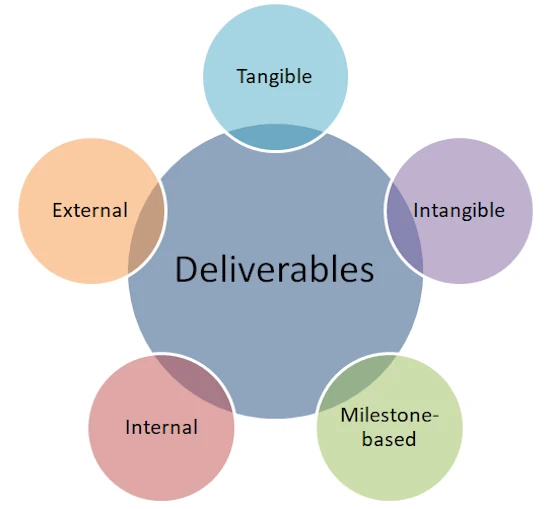
Deliverables are the specific products, services, or results that a project is required to produce. They represent the tangible or intangible outputs created throughout the project that must meet the project’s goals. Deliverables can vary depending on the nature and scope of the project but are always key components in achieving project success.
- Tangible Deliverables
These are physical products or materials that can be seen, touched, and used.
Examples: A building, a completed software program, a new machine, or a design blueprint. - Intangible Deliverables
These are often more abstract and consist of services, results, or information that cannot be "physically" delivered but are still central to the project’s goals.
Examples: A finished strategy, a report, an analysis, staff training, or technical support. - Milestone-Based Deliverables
Deliverables that mark the completion of a significant phase in the project. These are used to measure progress.
Examples: Completion of the design phase, finalization of a prototype, or passing an internal test phase. - Internal Deliverables
Deliverables not necessarily intended for the customer but used internally by the project team to drive the project forward.
Examples: Project plans, budget analyses, status reports, or risk assessments. - External Deliverables
These deliverables are specifically aimed at the customer or end-users and are the outcomes agreed upon in the contract or project scope.
Examples: A finished service, a production system, or an implemented CRM system.
Key Characteristics of Deliverables
- Clearly Defined
Each deliverable should be clearly described in the project plan. All stakeholders should understand what is expected to be delivered.
Example: Instead of just saying "new software," specify it as "a new CRM platform with features for customer follow-up and reporting." - Measurable
Deliverables should be assessable for quality and success. It should be clear when a deliverable is "complete" and meets the necessary requirements.
Example: A report is considered delivered when it has been approved by the project’s steering committee. - Time-Bound
Each deliverable should have a clear timeframe indicating when it should be completed and delivered.
Example: "Delivery of the first prototype within 3 months." - Aligned with Project Goals
Deliverables should directly support the project,'s overall goals and be in line with the defined project requirements.
Example: If a project’s goal is to improve customer service, the deliverable should contribute to this, such as a new support tool or training for customer service staff. - Approval and Quality Control
Each deliverable should undergo an approval process where it is assessed against the requirements. This ensures that what is delivered meets standards and expectations.
Example: A web development project might have an approval phase where the customer tests the system before it is implemented.
Process for Managing Deliverables
- Identification of Deliverables
In the project's initial phase (scope definition), identify all necessary deliverables. This ensures that the project’s purpose and goals are linked to concrete outputs.
Example: In a construction project, deliverables would include completed drawings, building permits, and the building itself. - Planning Deliverables
Deliverables are integrated into the project plan and assigned deadlines. Tasks are distributed among team members, and time is allocated for any approval processes.
Example: In an IT project, the first deliverable might be a completed requirements specification followed by development milestones. - Production and Delivery
When a deliverable is ready to be delivered, it is assessed against the established criteria, including quality, scope, and timeframe.
Example: A report is delivered to the customer but is only considered "complete" once it has been reviewed and approved. - Monitoring and Control
Ongoing monitoring of deliverables ensures they are delivered on time and meet all requirements. If a deliverable does not meet the criteria, corrections may be necessary.
Example: A software deliverable is tested and debugged before it is formally delivered. - Completion and Approval
When a deliverable is finished, it undergoes a formal approval process where the customer or project steering committee ensures that it meets all requirements.
Example: After completing a new website, the customer tests it and approves the design and functionality.
Importance of Deliverables
Deliverables play a central role in the success of a project. Without clearly defined deliverables, a project can lose direction, and it can be challenging to assess progress. Well-defined deliverables ensure that all stakeholders have a shared understanding of what the project should result.
Advantages of well-defined deliveries
- Clarity and Focus
Everyone knows exactly what needs to be delivered, which reduces the risk of misunderstandings and errors. - Improved Project Management
Project managers can better monitor progress and take action if deliverables are not provided as planned. - Increased Customer Satisfaction
When deliverables are provided as expected and on time, it enhances the customer's trust in the project team and increases the chances of project success.
Ultimately, deliverables are the tangible proof of the project's progress and success. Ensuring that deliverables are clearly defined, measurable, and delivered on time is crucial for a successful project.
Project Time Schedule
The project timeline is the period allocated to complete a project or deliver a specific result. It is a crucial part of project management, helping to ensure that the project stays on track, meets deadlines, and avoids delays. A clearly defined timeline enables more effective planning and management of resources, activities, and deliverables.

Importance of a Clear Timeline
Having a well-defined timeline is essential for project success for several reasons:
- Meeting Deadlines
A realistic timeline helps the project team ensure that all tasks and milestones are completed within the agreed deadlines, which is important for keeping clients or stakeholders satisfied. - Resource Management
With a fixed timeline, the project manager can plan when specific resources (labor, materials, capital) will be available, helping to avoid bottlenecks and inefficiencies. - Progress Tracking
A detailed timeline allows for monitoring the project's progress and comparing it with the planned deadlines. It enables early detection of delays and quick action to address them. - Task Prioritization
A timeline helps the team focus on high-priority tasks that need to be completed first, providing better oversight and structure. - Customer Expectations
Delivering projects on time enhances customer satisfaction and trust in the project team. A clear timeline makes it easier to communicate when customers can expect deliverables.
Building an Effective Timeline
To ensure the timeline is realistic and supports the project goals, follow these steps:
- Define Project Goals and Milestones
Start by identifying the overall project goals and breaking it down into smaller, manageable milestones. These milestones represent key results or phases in the project, and they should have clearly defined deadlines.
Example: In a software development project, milestones might include completion of requirements specification, prototype development, testing phase, and final implementation. - Use a Work Breakdown Structure (WBS)
WBS is a method of breaking the project into smaller tasks or subprojects. This helps identify what needs to be done and when each task should be completed. Breaking the project into smaller parts allows for more accurate time estimation and planning.
Example: In a construction project, WBS might include phases such as foundation, structural framework, electrical installation, painting, etc. - Estimate Time for Each Task
Each task should be assigned a realistic time estimate. Base these estimates on experience, data from previous projects, and input from team members performing the tasks. Include both the time required to perform the task and the time needed for any approvals or feedback.
Example: Estimate that the design phase will take 3 weeks, development will take 5 weeks, and testing will take an additional 2 weeks. - Identify Dependencies
Many tasks in a project depend on the completion of other tasks first. Identifying these dependencies is crucial to ensure tasks are performed in the correct order and to avoid unnecessary delays. Manage this using a Gantt chart or network diagram.
Example: In a construction project, the foundation must be completed before walls can be erected. - Add Buffers and Flexibility
While it’s important to have realistic time estimates, it's also necessary to build in buffers or slack. Unforeseen events, such as delays in material delivery or unexpected technical issues, may occur, and a buffer helps accommodate these risks without derailing the timeline.
Example: Add a 1-2 week buffer for critical phases like testing or external approvals. - Develop a Detailed Schedule
With time estimates for each task and identified dependencies, you can create a detailed schedule. This schedule should include start and end dates for each task as well as deadlines for milestones.
Example: "Complete functional specification from March 1 to March 15, development starts on March 16 and lasts until April 30." - Communicate the Timeline with Stakeholders
Once the timeline is developed, communicate it clearly to all stakeholders to avoid misunderstandings about deadlines or expectations. Clear communication is essential to ensure everyone is on the same page. - Monitor and Adjust the Schedule Regularly
No timeline is static. It is important to continuously monitor the project's progress and adjust the timeline if unforeseen issues or changes arise. Delays in one phase can impact other parts of the project, and a prompt response can help prevent more significant consequences.
Example: If the development phase takes longer than expected, you may need to adjust the schedule for the testing phase or add additional resources.
Tools for Time Management
Several tools can help manage and monitor a project’s timeline, including:
- Gantt Charts
Gantt charts provide a visual overview of project tasks and their timelines. They make it easy to see when a task starts and ends, and how it depends on other tasks. - Network Diagrams
Network diagrams show the relationships between tasks and help identify critical paths, i.e., the tasks that must be completed on time to avoid delays in the project. - Project Management Software
Tools like Proglar can help create and maintain a detailed schedule. They allow for task creation, deadline setting, and real-time progress tracking. - Scrum and Agile Methods
These methods work with shorter timelines (sprints) and frequent adjustments to the schedule. This is especially useful in projects where changes often occur.
Challenges with Timelines
Even with a detailed schedule, several challenges may arise:
- Underestimating Time
Many projects face issues due to underestimating the time needed for tasks. This can lead to delays and budget overruns. - Scope Creep
Adding new tasks or changes to the project along the way (scope creep) can pressure the timeline. - Unforeseen Events
Delays in deliveries, technical issues, or illness among team members can challenge the timeline.
To address these challenges, it is important to have flexibility in the schedule and be prepared to adapt to changes.
Wrapping up Project Time Schedule
A well-defined and realistic timeline is a fundamental element for any project. It helps manage resources, keep the project on track, and ensure deliverables are achieved within set deadlines. By planning carefully, monitoring progress, and making adjustments as needed, you can avoid delays and deliver projects on time.
Resource Management
Effective resource management involves planning, allocating, and monitoring the necessary resources to ensure they are used optimally and that the project can be completed within agreed-upon constraints. This includes:

- Resource Planning
Identify which resources are needed for the project and when they need to be available. This requires a detailed understanding of the project’s goals, tasks, and timeline.
Example: In a software development project, ensure that developers, testers, and designers are available during the relevant phases of the project. - Resource Allocation
Distribute resources so they are in the right place at the right time. This involves matching resources with the tasks they are best suited for and ensuring there is a balance between capacity and demand.
Example: If there is high demand for developers in the initial phase of the project, allocate more developers at that time. - Monitoring and Control
Continuously monitor how resources are being used and whether they are being utilized as planned. This includes tracking budget utilization, employee working hours, and material usage.
Example: If material usage in a construction project exceeds the planned budget, it may be necessary to adjust resources or find savings elsewhere. - Resource Optimization
If bottlenecks or inefficiencies occur, resources need to be optimized. This may involve reallocating resources or finding alternative solutions to avoid delays.
Example: If a key team member falls ill, another team member or an external consultant may need to step in to maintain progress.
Challenges in Resource Management
Resource management can be challenging, and several risks and issues may arise:
- Resource Overload
If resources, especially human resources, are overloaded, it can lead to burnout, reduced productivity, and delays. It is important to ensure a reasonable workload and avoid overburdening employees.
Example: If an employee is assigned too many tasks at once, it may lead to missed deadlines. - Resource Shortages
Projects may face situations where necessary resources are unavailable, either due to poor planning or unexpected changes in the project scope. This can create bottlenecks and delays.
Example: In a construction project, delayed delivery of building materials may halt the entire construction process. - Budget Overruns
If financial resources are not managed carefully, the project may exceed its budget. This can necessitate cuts or compromises in project quality or scope.
Example: An IT project may run out of budget if development takes longer than planned, requiring the hiring of additional consultants. - Skill Gaps
Sometimes, a project team may lack the necessary skills to perform certain tasks, which may require training or hiring external specialists.
Example: If a project team lacks experience with a specific type of software, training or hiring a consultant with the necessary expertise may be required.
The Role of Resources in Project Success
Successful resource management directly impacts project progress and completion. When resources are managed correctly, the project can be executed efficiently and within time and budget constraints. Failure in resource management can lead to delays, cost overruns, and even project failure. Therefore, it is crucial for any project manager to have a clear overview of available resources and manage them effectively.
Conclusion
Resources are the foundation of any project. Without the right resources—and without a strategy for how they are used—a project can quickly encounter problems. Good resource management requires thorough planning, monitoring, and adjustment to ensure the team can perform effectively and achieve the desired goals. By ensuring that resources are sufficient and properly allocated, the project manager can maximize efficiency and minimize risks.
Exclusions
Exclusions in project management refer to the areas, factors, or conditions that are outside the scope of the project and are deliberately excluded from project planning or execution. Exclusions are important to define clearly as they help manage expectations for the project, both internally within the project team and externally with stakeholders. By specifying what is not included in the project, the risk of "scope creep," where the project scope grows uncontrollably, can be minimized.
Why Are Exclusions Important?
Exclusions are part of the overall project plan and contribute to creating clarity about the project's boundaries. This helps ensure that the project remains focused on its core goals and deliverables without being distracted by unforeseen or irrelevant tasks. Some of the key reasons for defining clear Exclusions include:
- Expectation Management
By establishing what is not part of the project, the project manager and team can better manage stakeholder expectations. This prevents misunderstandings and reduces the risk of disappointment if there are areas that clients or other parties believed were included in the deliverables but are actually not. - Focus on Core Tasks
Exclusions help keep the project on track by clarifying which tasks and activities are essential for the project's success and which are outside the project's purpose. This makes it easier to prioritize and ensure that resources are used optimally. - Protection Against Scope Creep
Scope creep occurs when the project scope expands continuously without formal approval or additional resources. By having clearly defined exclusions, the project manager can more effectively resist pressure to add more tasks or deliverables that were not originally part of the plan. - Risk Management
When the project's exclusions are clearly defined, the team can better anticipate potential risks by knowing which areas they do not need to address. This allows for more proactive risk management and avoids unexpected costs or delays due to external demands.
Examples of exclusions
Exclusions vary from project to project depending on its scope, resources, and objectives. Some common types of exclusions include:
- Geographical Exclusions
Example: In a construction project, the work may be limited to a specific zone or area, with everything outside this zone not being covered by the project's responsibilities. - Technological Exclusions
Example: If an IT project is about developing a mobile app, it may be defined that development only includes iOS and not Android, or that certain legacy systems will not be integrated. - Temporal Exclusions
Example: A project may have a fixed deadline, meaning that certain tasks cannot be completed if they are not finished by a specific date. - Budgetary Exclusions
Example: If there is a tight budget, certain features or materials may be excluded to keep costs under control, such as using standardized components instead of custom solutions. - Deliverable Exclusions
Example: In a marketing project, it may be agreed that the project only includes the creation of an online campaign, while traditional media such as print ads or TV commercials are not included. - Resource Exclusions
Example: If a project has limited access to specialized labor, it may be necessary to exclude certain tasks that require unique skills that cannot be obtained within the timeline or budget.
How Are Exclusions Defined?
To ensure that exclusions are clear and understandable for all parties, several key steps should be followed:
- Collaborate with Stakeholders
Involve stakeholders in the process of defining exclusions. Their input is crucial for ensuring that there are no misunderstandings about what the project entails and what it does not. - Document Clearly
Exclusions should be described in the project charter or project plan so that everyone has a clear understanding of what is included and excluded. This can be done in a section on "Scope" or "Exclusions." - Be Specific
When defining exclusions, it is important to be as concrete as possible. Vague or unclear descriptions can lead to problems later in the project when stakeholders may try to expand the scope. - Review Regularly
Exclusions may change over time as the project evolves or new information arises. Ensure that they are reviewed regularly and adjust the project plan if necessary to reflect any changes in the project's assumptions.
Exclusions and Project Success
One of the greatest benefits of having clear exclusions is that it creates a shared understanding among all project stakeholders and ensures that resources are used optimally. When exclusions are clearly defined, it is easier to manage risks, avoid conflicts, and ensure that the project stays within the defined scope, timeline, and budget.
Having defined exclusions also makes it easier for the project manager to say no to requests for additions that are outside the project’s scope and helps maintain focus on the original goals and deliverables.
Conclusion
Exclusions are an essential part of any project plan and must be clearly defined to avoid misunderstandings, scope creep, and inefficient use of resources. By setting boundaries on what the project includes and excludes, the project manager can better manage expectations and ensure that the project stays on track. Exclusions protect the project's integrity and enable the delivery of successful outcomes within the established constraints.
Requirements and Success Criteria
Requirements and success criteria are central components in project management as they define what the project must achieve to be considered successful. Understanding and documenting these elements is crucial to ensure that the project meets stakeholders' expectations and fulfills its objectives.
Requirements
Requirements refer to the specific needs, wants, or conditions that must be met for the project to be considered successful. Requirements can be functional or non-functional and form the foundation for project planning and execution.
Types of Requirements
- Functional Requirements
Functional requirements describe what the system, product, or solution must be able to do. They focus on the functions and features that need to be present to meet the user's needs or solve a specific problem.
Example: In a software project, functional requirements might include the ability for users to log in, create and edit profiles, and generate reports. - Non-Functional Requirements
Non-functional requirements describe the quality attributes and conditions of the system that are not directly related to the functional aspects but are important for the project's success. These typically include system performance, security, usability, and maintainability.
Example: A requirement that the software application must handle 1000 concurrent users without crashing, or that it must be compatible with certain operating systems. - Business Requirements
Business requirements are related to the project's goals and outcomes and how they contribute to the organization's overall strategic objectives. These requirements help ensure that the project provides value to the business.
Example: A business requirement might be to reduce costs by 20% through the implementation of a new system. - User Requirements
User requirements are based on the needs and expectations of the users. These requirements are often gathered through user surveys, interviews, or observations.
Example: A user might require that a mobile app have an intuitive user interface that is easy to navigate. - Regulatory Requirements
Regulatory requirements are those that must be met to ensure the project complies with relevant laws, standards, and regulations applicable to the industry or field.
Example: A project developing medical equipment must comply with health and safety standards and regulations from health authorities.
Success Criteria
Success criteria are the measurement methods and standards used to assess whether the project has been completed satisfactorily and meets the desired goals. They help define what constitutes a successful project completion.
Types of Success Criteria
- Temporal Criteria
Temporal success criteria refer to whether the project was completed within the set timeframe. Meeting deadlines is often a primary indicator of project success.
Example: If a project is scheduled to finish within 6 months, success will be measured by whether this goal was achieved. - Budgetary Criteria
Budgetary success criteria concern whether the project was completed within the allocated budget. Budget overruns can indicate a lack of control or inefficiency.
Example: If the project budget was 1 million €, and the actual expenditure was 950,000 €, it will be considered a success if it was within the set limits. - Quality Criteria
Quality criteria evaluate whether the project’s deliverables meet the specified requirements and standards. This includes functionality, reliability, and usability of the outputs.
Example: A web application must be free of critical bugs, function correctly on all supported devices, and meet design standards. - User Satisfaction
User satisfaction criteria focus on how satisfied end-users are with the project's deliverables. This can be measured through feedback, surveys, or user analysis.
Example: A customer might be satisfied if the new system features are easy to use and have improved workflows. - Business Objectives
Business objectives criteria assess whether the project has achieved its broader business goals, such as increasing revenue, reducing costs, or improving the company’s market position.
Example: If a marketing project aimed to increase sales by 15%, success will be measured by whether this goal was achieved. - Regulatory Compliance
Assessment of whether the project has been completed in accordance with all relevant laws, rules, and standards applicable to the project's domain.
Example: In a financial project, it should be assessed whether all regulatory requirements and compliance standards have been met.
How to Define Requirements and Success Criteria
- Identify Stakeholders
Engage all relevant stakeholders in the process of defining requirements and criteria. Their input is crucial to ensure that all needs and expectations are considered.
Example: In a construction project, stakeholders might include clients, architects, engineers, and end-users. - Document Requirements
Create a requirements specification or document that details all the requirements to be met. This document serves as a reference and guide throughout the project.
Example: A detailed requirements specification for a software project might include descriptions of all functionalities, user interfaces, and integration requirements. - Define Success Criteria
Establish clear, measurable criteria for how success will be assessed. These criteria should be specific, measurable, achievable, relevant, and time-bound (SMART).
Example: "The project is deemed successful if it is completed within 5 months, with a budget deviation of no more than 10%, and achieves a user satisfaction rate of 85%." - Obtain Approval
Get approval from stakeholders for both the requirements and success criteria. This ensures that all parties agree on what is expected and what will be considered a successful delivery.
Example: Obtain signatures from the project sponsor and key stakeholders on the requirements specification and success criteria. - Monitor and Adjust
Continuously monitor how the project is performing against the established requirements and criteria. Be prepared to adjust if changes in the project's scope or objectives arise.
Example: If new regulations are implemented, it may be necessary to update the project requirements and criteria to ensure compliance.
Requirements and success criteria - final thoughts
Requirements and success criteria are fundamental to ensuring that the project meets expectations and achieves its desired goals. By defining clear requirements and measurement methods for success, the project team can effectively manage the project, minimize risks, and deliver outcomes that align with stakeholders' needs. Effective management of requirements and criteria contributes to the overall success of the project and helps ensure that all parties are satisfied with the final results.